


On the Road – Inflation, Automation and Weight Loss in the US
Following a recent research trip in the United States, WaveStone Deputy PM Kirsty Mackay-Fisher explores how inflation, automation and the rise of GLP-1 weight loss drugs are transforming both the US and companies closer to home.
Over the course of two weeks in September, I travelled to the US to meet with several companies and conduct specialist interviews to understand how some Australian companies operating in the US are faring. I spoke with macro strategists, sector analysts and healthcare policymakers, and conducted targeted channel checks with pallet-industry contacts, audiologists and clinicians. Particularly interesting was the site visits to Walmart’s New Hampshire automated distribution centres, which provided a practical view of how automation is changing warehouse economics and supply chain requirements. Industries of focus included transport, packaging, building products, beverages, infrastructure, airlines, pharmaceuticals, diagnostics and medical device companies. It was a busy couple of weeks.
While the conversations ranged from warehouses and freight networks to obesity drugs and healthcare funding, several themes kept coming up. Inflation persists, but its impact varies widely by industry and by company. Automation is increasingly becoming a practical part of day-to-day supply-chain operations. And GLP-1 obesity medicines are becoming more widely available, aided by easier dosing and broader access. In healthcare, the policy backdrop feels calmer than it did a year ago, although healthcare expenditure remains high and is trending higher as developed markets see aging populations. Affordability of healthcare is likely to remain a trend in future.
Inflation pressures are building
There was a lot of talk of inflation starting to embed itself in the system. Freight volumes and industrial activity are improving, possibly buoyed by the onshoring trend, but companies are increasingly facing higher energy, fuel, labour, metals and tariff-related costs flowing from the Middle East conflict and uncertain geopolitics. Most transport; packaging and industrial businesses were optimistic they could recover those costs through pricing.
For some inputs, such as fuel, there may be established mechanisms for pass though. For others, these higher costs need to be captured into pricing negotiations for which there may be a lag. Companies were focussed on maintaining customer service levels to give better prospects of taking price; in many instances the negotiations are expected to be aided by capacity constraints, including in airlines and paper packaging, with paper mills operating at around 95% of capacity when optimally they should be in the low 90s.
The pressure on consumers was easy to see. Following a number of years of post-Covid de-stocking, the pallet-industry contacts we met with described flat volumes. Consumer cost-of-living pressures are resulting in more product substitution toward generic brands and club-based stores. In the US, this makes Costco and Sam’s Club the relative winners, which is good for the pallet poolers like Brambles (ASX: BXB) as they over-index to these channels. There was also weaker discretionary spending in high calorie treat/impulse-based food, which likely stems from both strained household budgets and increasing use of weight loss drugs.
Housing remains especially difficult because mortgage rates, building-material costs and labour shortages are all working against affordability. At the same time, premium air travel is holding up well, a function of an ongoing prioritisation of travel and disciplined capacity management in the face of rising costs. Spending is supported by employment in the US, which remains strong, but affordability pressures are forcing consumers to be more selective. In the words of one CFO, for some consumers the choice is between putting fuel in the truck and buying a new shirt.
Inflation is affecting our holdings in different ways. Qantas (ASX: QAN) has been supported by resilient premium and international travel demand which together with capacity management is allowing better pass through of higher fuel, labour and operating costs. The global shortage of airframes and the presence of a rational domestic competitor in Virgin also aids the pricing dynamic. Woolworths (ASX: WOW) is dealing with a selective consumer and must balance affordability with cost recovery. Customers remain value conscious, so the company is prioritising efficient operations, low prices, range and convenience rather than trying to recover inflation in pricing. James Hardie (ASX: JHX) faces a difficult US housing backdrop, so its repair-and-remodelling exposure, channel strength and ability to take share matter more than a quick market recovery. For Brambles (ASX: BXB), price and surcharge mechanisms help recover inflation, but the US network also needs additional spending to restore service and repair capacity, suggesting the company will need net new wins and/or some additional pricing to defray these costs. Longer term greater investment in automation should help to mitigate some of these costs.
Automation is becoming more prevalent in supply chains
The most vivid example of the impact of automation came from a visit to a Walmart distribution centre (DC) that had been fitted with Symbotic technology. The site can now move roughly twice as much product through half the warehouse space, with an expected cash payback of about five years from the investment. The savings come not only from labour, but also from a lower required inventory and more efficient use of the property footprint. Importantly, this technology can be retrofitted to older, existing sites; the DC we visited first opened in 1996.
This shift has implications for the supply chain. Automated systems require pallets, packaging and data to be much more consistent because damage and inconsistencies can be highly disruptive to the system. This is supportive for the pooled pallet providers, which typically offer a stronger and more consistent pallet than the whitewood operators. This trend should help the pooled players attract share, with Sam’s Club’s move away from whitewood pallets last year supportive of this trend (retailers often specify how they expect product to be shipped). Automation should also speed up pallet turns, particularly if implemented in retail DCs in a similar fashion to Walmart/Symbiotic, with product stacked directly on shelves and pallets only used for the transport legs.
With product moving through the system faster and pallets no longer dwelling with the product on warehouse shelves, pooling operators should generate faster assets turns, potentially with less damage, given fewer touch points with forklifts through the process too.
While automation could bring increased turns and potentially lower damage rates, it also requires a greater level of pallet uniformity. Automation systems are less tolerant of poor repair, requiring investment by the poolers in systems (screening, repair and sortation) to ensure pallets meet the required specifications.
Products sitting directly on shelves in the new Symbotic system (LHS) and on pallets in an older Walmart DC (RHS)
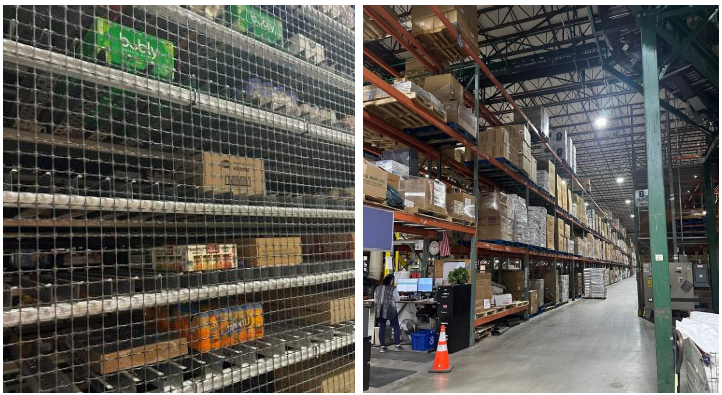
Source: WaveStone Capital, September 2026.
Automated product collection cart (LHS) and products being automatically picked for store delivery (RHS)
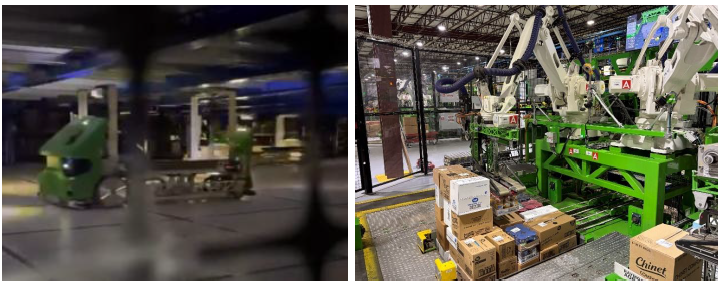
Source: WaveStone Capital, September 2026.
In our portfolio, Brambles is the clearest beneficiary. The shift toward automation should increase demand for consistent pooled pallets and could increase asset turns. After losing two subcontractors earlier this year, Brambles has some work to do restoring its US repair capability and possibly also improving supplier economics. Our meetings with industry representatives provided comfort that the shift to new subcontractors should be able to be smoothly managed, while also suggesting the economics in these relationships needed some reinvestment, which we are mindful of as a risk. CHEP (BXB) and PECO typically operate rationally in the pooling market suggesting any required investment in systems should be able to be recovered in price over time.
The Walmart DC visit also reinforced the direction of travel for Woolworths. Distribution and fulfilment automation can improve labour productivity, inventory turn and property utilisation, but returns depend on reliable technology and disciplined execution, which to date has successfully differentiated Woolworths from Coles. Across the portfolio, we view automation as most valuable when it strengthens an existing network advantage rather than simply promising near-term labour savings.
The market is seeing expanded access to GLP-1s
The discussion around GLP-1 obesity drugs has moved on from being a question of how strong near-term demand is to how the treatment could be made available to wider patient populations and the impact this could have on total system costs. The question is how the market develops from here, with access replacing supply as the main constraint. Drug companies are building a range of options for different patients: tablets rather than injections, monthly dosing, maintenance treatments, combinations with other medicines and products with fewer gastrointestinal side effects. 1 in 8 people in the US have now tried a GLP-1. Lilly said oral drugs now account for more than 30% of new patient starts and appear to be bringing new people into treatment, rather than simply taking share from injections.
“1 in 8 people in the US have now tried a GLP-1”
There is still a very large gap between the number of people who could benefit, and the number currently using these medicines. Employer coverage is still only around half of the commercial market, and US Medicare is still prevented by legislation from offering obesity drugs to its participants, so lower prices and clearer evidence of healthcare savings will be important for payer coverage to increase. The system is showing signs of gradually evolving on this front, with Medicare’s CMS recently launching a temporary demonstration (from 1 July 2026 to 31 December 2027) to a select group of system participants for access to the drugs for a small $50/month co-payment. 600,000 patients have enrolled in this service in the first 60 days, with Lilly indicating roughly 60-70% of these patients were new to GLP-1 treatment.
The opportunity also extends beyond the drug makers to companies supplying the industry’s ‘picks and shovels’, such as injection components, while consumer businesses are adjusting to changing habits. Coca-Cola, for example, is seeing consumers move away from full-sugar drinks and towards protein-rich products such as Fairlife, and the supply chain operators are noting fewer high calorie impulse purchases.
For the WaveStone portfolio, the potential impacts of GLP-1 adoption have to date been most directly relevant to our holding in ResMed (ASX: RMD). Weight loss may reduce sleep-apnoea severity for some patients over time, but for now greater obesity awareness and diagnostic activity are drawing more people into the medical channel and expanding the patient funnel. There remains a large, under-diagnosed market in obstructive sleep apnoea, so the opportunity to convert more patients to therapy remains large. For Fisher & Paykel Healthcare (ASX: FPH), the impact is less direct, with its core opportunity still centred on respiratory care and expanding use of high flow therapy. CSL (ASX: CSL) is not a direct GLP-1 winner, but the conference reinforced companies reported US HC policy risk as declining in 2026 versus 2025 and expect it to ameliorate further into 2027. Leadership changes within the US HC administration are leading to more constructive dialogue and direct negotiation is lowering MFN risk.
Investor lens
Our view is that these trends – inflation, automation and access to weight loss medications – broadly reinforce our portfolio positioning into category leaders with strong networks, differentiated products, dominant share and the capacity to reinvest. The trip strengthened the long-term automation case for Brambles and Woolworths and the importance of execution in managing complex networks. Meetings also highlighted the importance of a rational market, and the added benefits of capacity constraints for inflation/cost pass through. The shortage of airframes is helpful for Qantas given the importance of cost pass through of higher fuel. We saw confirmation that while facing macro headwinds from higher rates and affordability, James Hardie has the potential to deliver through execution and share gains, rather than rely on a housing recovery. Healthcare sector growth remains attractive, particularly given demographic trends, however outcomes can be shaped by access, reimbursement and competition from new technology. We remain mindful that the cost burden of caring for an aging population will require an evolution in care models in time potentially favouring treatments that are more preventative than acute. For now, we take some comfort from a stabilising policy environment whilst retaining a focus on whether strong market positions for our global healthcare operators such as Cochlear (ASX: COH), ResMed (ASX: RMD), Fisher & Paykel Healthcare (ASX: FPH) and CSL (ASX: CSL), can translate into sustainable earnings as these conditions evolve.