


Taking the temperature: The impact of El Niño and the new climate reporting on companies
Following the August reporting season, AGM season is where the governance, remuneration and sustainability disclosures in annual reports and notices of meeting come under shareholder scrutiny. At WaveStone, direct engagement with management and boards helps us look beyond the narrative and test disclosure against the underlying economics, operating reality, future prospects and governance of a business before incorporating emerging trends into our investment view. Outside the usual executive remuneration, board elections, two new areas on watch for investors have been the impact of El Niño on companies, and how mandatory climate reporting requirements are being implemented by businesses.
El Niño is approaching
El Niño is a natural climate pattern that significantly impacts temperatures and rainfall around the world, and the upcoming El Niño event is likely to be one of the strongest on record. El Niño is highly trackable months in advance, however, giving investors an opportunity to identify the economic consequences before they fully materialise.
Temperature anomalises this year vs every year since 1982
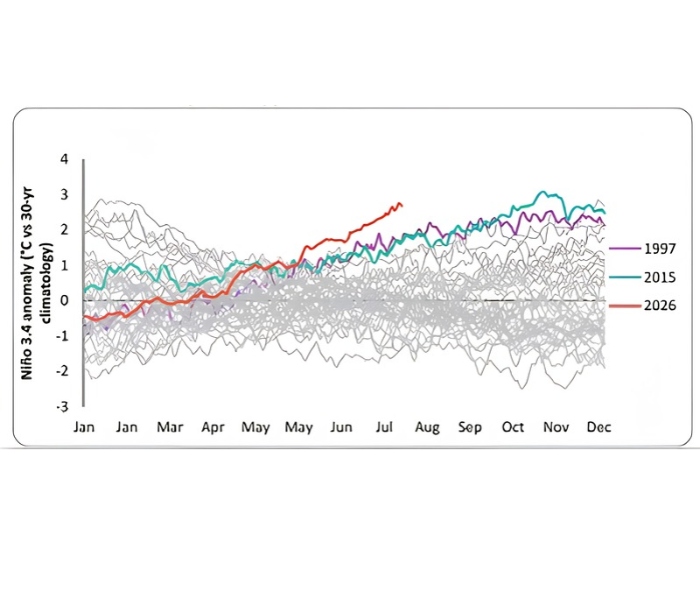
Source: Jefferies Research, Climate Dashboard
Companies will not be impacted to the same degree, and importantly, not all the impacts are negative. Some examples of stock level implications include:
- Insurers – for insurers like QBE Insurance Group (ASX:QBE), Insurance Australia Group (ASX:IAG) and Suncorp Group (ASX:SUN), El Niño is likely to be a net positive, as risk moves away from flood, cyclone and East Coast Storm Losses (La Nina) to bushfire, drought and heat risk. Bushfires are historically less costly in aggregate. El Niño is expected to deliver ~40% lower claim severity, implying lower peril losses and better insurance margins.
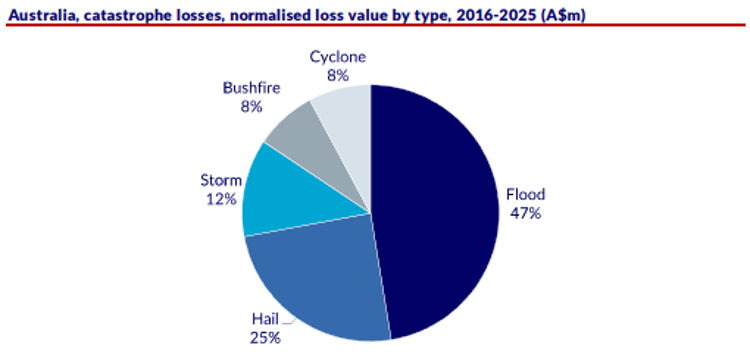
Source: CLSA, Insurance Council of Australia.
- Banks – banks face a neutral to negative impact, with the potential for higher non-performing loans in agricultural books. Bendigo and Adelaide Bank (ASX:BEN) and NAB (ASX:NAB) have the largest exposure to agriculture, at 8% and 6% of their credit exposures, respectively.
- Healthcare – Ramsay Health Care (ASX:RHC) faces a neutral to positive impact; an El Niño driven surge in respiratory illness or heat-related presentations now flows more directly into private hospital and diagnostics utilisation.
- Energy – for Origin Energy (ASX:ORG), the impact is likely to be positive, as a hotter, drier summer should reverse the recent weakness in wholesale electricity prices, driven by stronger air-conditioning demand and potentially lower hydro generation out of Tasmania. Net long wholesale power should perform well on firmer pricing, with additional upside risk if thermal fleets fail during prolonged heat events and spike prices sharply.
Climate compliance: disclosure discipline overtakes voluntary reporting
Mandatory reporting under AASB S2
Mandatory AASB S2 climate reporting, which has been in effect for the largest corporates since 1 January 2025, has been a major undertaking. In our engagements with companies, views on the usefulness of the exercise in preparing these reports as a company were mixed and responses varied widely. The most commonly cited positive was stronger formal governance, along with greater traction for climate conversations across operational and business teams and a better ability to connect the dots into a holistic story.ASIC recently identified opportunities for improvement, with a review of 40 reports finding that baseline compliance and governance processes were developing, while forward-looking disclosures were mixed. The main areas for improvement were quantification of financial effects, connectivity with financial reporting, materiality judgements and comparability of metrics across industries.
Targets revisited
Some companies have revisited their publicly stated climate targets. Some have softened them, some have strengthened their ambitions, and others have simply added caveats or disclaimers to existing aspirations, goals or targets. Selected examples include:
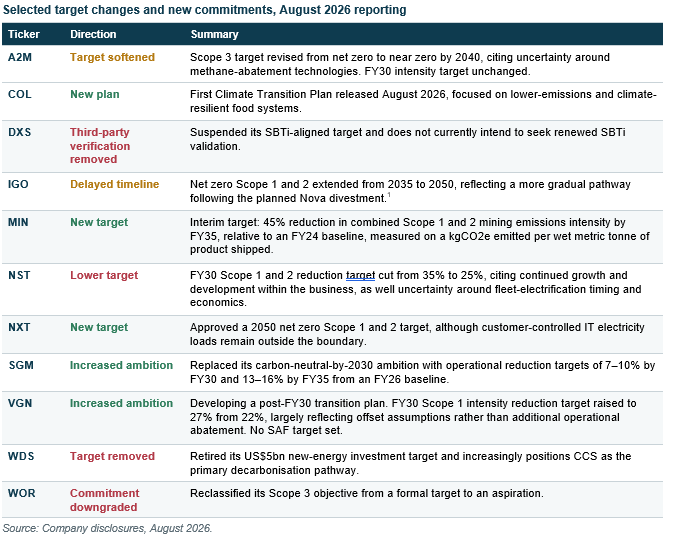
The end of carbon neutral claims
A key development during the year was the end of carbon neutrality claims, driven by greenwashing concerns. The wind-down of the Climate Active certification program is perhaps a positive for consumer protection and we note implications for ASX companies such as below:
- AGL Energy (ASX:AGL): the company faces a class action over carbon neutral claims
- Qantas (ASX:QAN): in FY25 the company evolved its Fly Neutral program and has since renamed it to Voluntary Carbon Program
- Breville Group (ASX:BRG): no longer advertises carbon neutrality even though it purchases offsets.
Looking ahead: the 2026 AGM Season
The 2026 AGM season provides another opportunity to test whether the issues highlighted through reporting season are translating into stronger governance, better operating discipline and ultimately better shareholder outcomes.
Across climate, we will be looking beyond the volume of new disclosure to the credibility of assumptions, capital allocation and execution. The resetting of targets across a number of companies is not necessarily positive or negative in itself. For fundamental investors, the more important question is whether targets reflect realistic economics, technology pathways and operational constraints, and whether changes in ambition alter the capital required, risk profile or long-term earnings potential of the business.
Nature and physical climate risk are developing at different speeds across sectors. Rather than treating new disclosures as an end in themselves, our focus is on cases where these risks can affect asset values, insurance costs, supply chains, underwriting, capital expenditure or earnings. The same principle applies to El Niño and other physical-risk scenarios: the investment relevance comes from understanding individual company exposures rather than making broad sector assumptions.
As we move through the 2026 AGM season, our focus remains on the issues that can change our assessment of earnings, risk, management quality or valuation. Ultimately, that is the test of materiality for us, and where active ownership and fundamental analysis can add value for our clients.